Secured vs. Unsecured Debt: What Can They Actually Take?
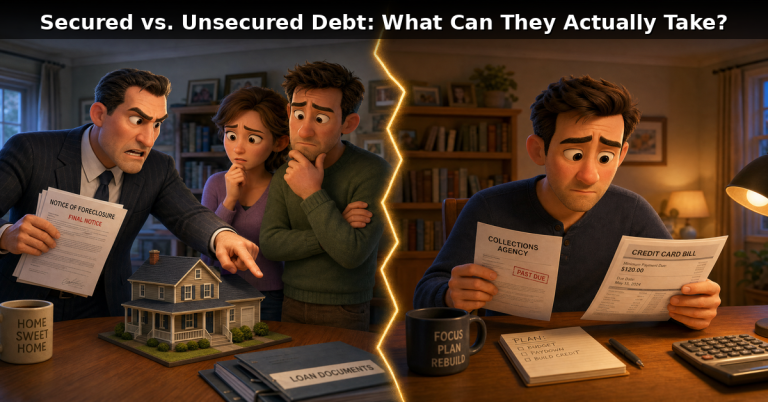
Most people know that missing a payment is bad. Fewer people pause to ask the deeper question: bad in what specific way? The answer depends almost entirely on one key factor, which is whether your debt is secured or unsecured. That single distinction shapes exactly how much risk you are carrying, the order in which debts deserve your attention, and what a creditor can actually do if things go sideways.
The Core Difference: Collateral
A secured debt is backed by a specific asset, known as collateral. When you signed for that debt, you agreed that if you stop paying, the lender has a legal claim to that asset. They can take it, sell it, and apply the proceeds directly to what you owe.
An unsecured debt has no such agreement in place. There is absolutely no asset attached to the loan. If you stop paying, the creditor cannot simply seize your property. They have other options available, which we will cover below, but they do not have an automatic right to something you own.
Common examples:
 
Secured Debt
Unsecured Debt
Mortgage
Credit cards
Auto loan
Medical bills
Home equity loan / HELOC
Personal loans (most)
Secured personal loan
Student loans (federal)
What Happens When You Stop Paying a Secured Debt
Because a lender holds collateral, they have a much faster and more direct path to recovering their moneyIf you miss your mortgage payments, the lender can begin foreclosure. This is a legal process that can ultimately result in you losing your home. Timelines vary by state, but the underlying mechanism is crystal clear: the house itself is the collateral.
If you miss your auto loan payments, the lender can repossess the vehicle. Depending on state law, they can sometimes do this without even going to court first.
The word “secured” sounds almost reassuring, as if your debt is somehow safe. It is actually the exact opposite. It means their claim is secured, not yours.
What Happens When You Stop Paying an Unsecured Debt
Without collateral, a creditor has to work much harder to get their money back.
Typically, the sequence looks something like this:
 
  • The account goes delinquent. Late fees begin to accumulate, and the missed payment is reported to the credit bureaus.
  • The debt is charged off. After roughly 180 days of non-payment, the creditor writes the balance off as a loss on their books. This does not mean the debt disappears; it simply means it moves to the next stage.
  • The account may be transferred to an internal collections department or sold to a third-party debt collector.
  • Lawsuit and judgment. If a creditor or collector sues you and wins, the court issues a judgment against you. This is the point when things can escalate significantly.
A court judgment opens up additional tools for creditors, such as wage garnishment, bank account levies, and, in some states, liens placed on real property. Therefore, unsecured debt that goes completely unaddressed for long enough can eventually threaten your assets too. It just takes much longer and requires formal court action.
The key takeaway is that unsecured debt can seriously damage your financial life, but it generally cannot take your house or car without a legal fight that unfolds over months or even years.
Why This Matters for How You Think About Payoff
Understanding secured versus unsecured debt is not just trivia; it is foundational to building a smart payoff strategy.
Risk weighting. Not all debts are equally dangerous to ignore during a tight month. A secured debt in default puts a physical asset at immediate risk. An unsecured debt in default begins a slower, credit-focused chain of consequences. Neither outcome is good, but the urgency differs dramatically.
The equity trap. Homeowners sometimes consider using home equity to pay off credit cards or other unsecured balances. When you do that, you are converting an unsecured obligation with no collateral into a secured one backed by your home. The interest rate may be lower, but you have raised the stakes on what happens if life gets hard again. That trade-off deserves careful thought, rather than a reflexive yes.
Prioritization frameworks. Many households carry both types of debt simultaneously. Knowing which category each debt falls into helps you see your full picture clearly. You understand what is at risk, what the consequences of delay look like, and where minimum payments protect something irreplaceable.
A Quick Note on “Soft” Secured Debts
Not every secured debt puts a major asset on the line. A secured credit card, for example, is backed by a cash deposit you make upfront. If you default, the lender simply keeps the deposit. The stakes are much lower than a mortgage. When you are evaluating your own debts, it is worth noting exactly what the collateral actually is.
Building Your Full Picture
Before you can map out a payoff plan, you need a clear inventory: every debt, its balance, its interest rate, and whether it is secured or unsecured. That inventory is the starting point for everything else, including prioritization, sequencing, and understanding which debts pose the greatest risk to your household’s stability.
Tools like yourdebtresolved.com are built around exactly this kind of structured view. When you can see all your debts laid out alongside their types and terms, the path forward becomes a lot less intimidating.
Collateral is not just a minor detail buried in the fine print. It is the dividing line between a debt that can hurt your credit score and a debt that can cost you your home. Knowing which side of that line each of your obligations sits on is one of the most useful things you can do before making any major payoff decision.
Secure your future: HERE


yourdebtresolved.com publishes this article for general education only. It is not financial, legal, tax, or investment advice, and it is not a recommendation of any specific product, lender, or strategy. Mortgage acceleration involves voluntary extra principal payments, and there is no guaranteed payoff date or savings amount. Your situation is unique; consult a licensed professional before acting. Individual results vary.